


Fuel prices in Western Australia have hit levels that are hard to ignore. Unleaded petrol sitting at $2.50 to $2.60 per litre – with no real sign of relief on the horizon – is putting real pressure on household budgets. With global oil supply chains under strain and geopolitical tensions continuing to drive prices upward, filling up the family car has become one of the most painful recurring costs a WA family faces.
So what are smart homeowners doing about it?
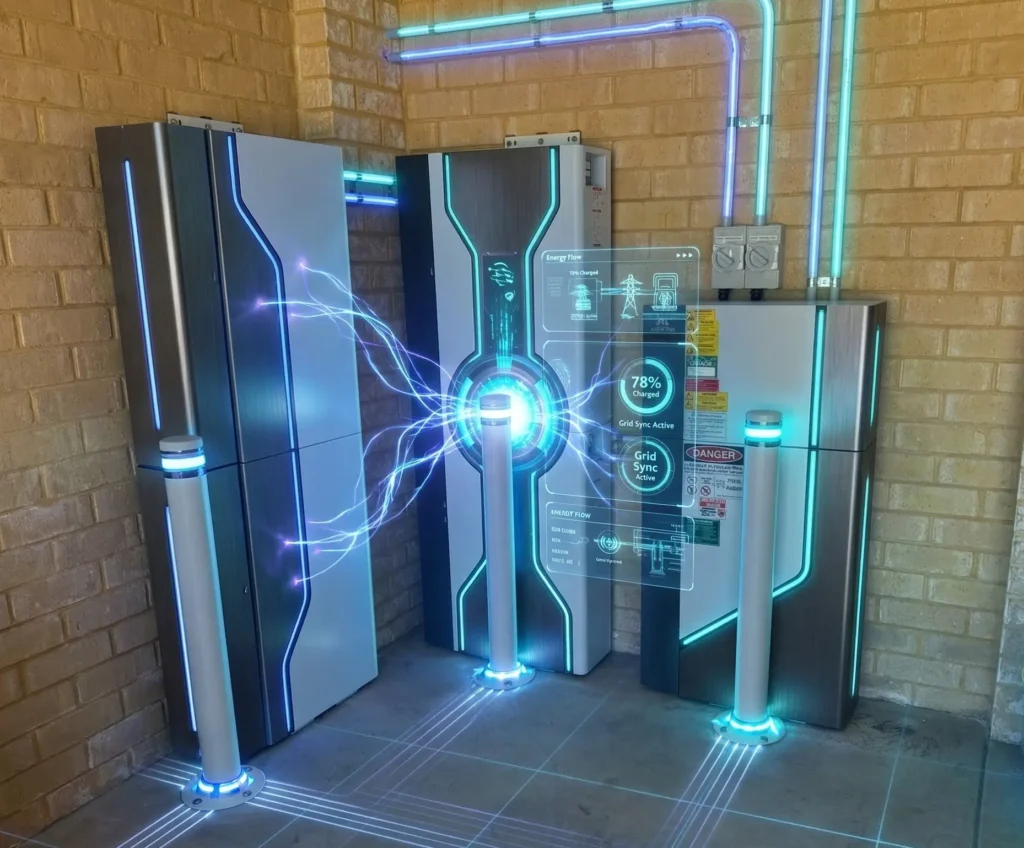
Some are making a decision that changes the equation entirely: going electric. And for those who already have an EV – or are seriously considering one – there’s a setup available right now in Western Australia that can make running and charging your electric vehicle remarkably cost-effective. It combines rooftop solar, home battery storage, and Synergy’s EV Add-On electricity plan into a single, intelligently managed energy system.

Key Takeaways:
- WA petrol is sitting at $2.50-$2.60 per litre (or $3 for diesel) – switching to an EV is one of the most effective ways to break free from fuel costs
- Synergy’s EV Add-On plan offers a Super Off-Peak rate of just 8.6151 cents per unit (9am-3pm) and an Overnight rate of 19.3841 cents per unit (11pm-6am)
- Combine solar generation with force-charging your battery from the grid at 8.6 cents during the day, so you arrive at the 3-9pm peak period with a full battery – and never pay the 53-cent peak rate
- From 11pm, charge your EV overnight on low-cost grid power and remaining battery storage – at a fraction of the cost of petrol
- DMG Solar installs the complete setup – panels, battery, and EV charger – to make this system work seamlessly in your home
Here’s how it works – and why the numbers are so compelling.
The Fuel Crisis Is a Catalyst – But the Solution Is Bigger Than That
Whether you’re thinking about your next car purchase, already driving electric, or just watching your power bills climb alongside your fuel bills, this article is for you.
If you’re still driving petrol: the next car you buy, consider going electric. The upfront cost gap is narrowing, and when you’re charging at home on the right plan, your “fuel” cost per kilometre drops dramatically.
If you already own an EV: the method outlined below is how you get the absolute most out of it – charging smarter, spending less, and reducing your reliance on both expensive grid power and expensive petrol.
If you have solar but haven’t optimised around an EV yet: read on, because the system described here is designed precisely for households like yours.
The smart move for WA homeowners with an electric vehicle isn’t just installing solar – it’s combining solar generation, battery storage, and a time-of-use electricity plan to create a seamlessly efficient energy ecosystem.
Read on to find out how it all works together.
Understanding Synergy’s EV Add-On Plan
Synergy’s EV Add-On is a time-of-use electricity plan designed specifically for residential customers with a plug-in electric vehicle registered in Western Australia. Instead of a flat rate for all electricity, your day is divided into four distinct pricing tiers:
- Peak (3pm-9pm): 53.8446 cents per unit – the most expensive period of the day
- Off-Peak (6am-9am and 9pm-11pm): 23.6916 cents per unit
- Overnight (11pm-6am): 19.3841 cents per unit – a significantly reduced rate ideal for overnight EV charging
- Super Off-Peak (9am-3pm): 8.6151 cents per unit – the lowest rate of the day, aligned with peak solar generation hours
The daily supply charge sits at 129.2269 cents per day. To access this plan, you’ll need a time-of-use meter, which Synergy and Western Power can organise if required (a meter reconfiguration fee of $109.25 may apply).
At first glance, that peak rate of over 53 cents per unit might look alarming. But here’s the thing – with the right solar and battery setup, you may never need to draw from the grid during peak hours at all.
The Perfect Day: How Your Energy Flows
Picture a typical weekday for a WA household with a well-sized solar system, a quality battery bank, and a home EV charger. Here’s how the energy story unfolds from morning to night.
Morning (6am-9am): The household wakes up and starts its day – showers, breakfast, getting kids ready for school. The sun is rising and solar generation is beginning to ramp up. Any grid power drawn during this window falls into the Off-Peak rate of around 23.6 cents per unit – relatively affordable. Your battery, having charged your EV overnight, still holds a reserve for the home.
Daytime (9am-3pm – Super Off-Peak): This is where the system really earns its keep. During these six hours, the sun is at its most productive and your panels are generating at or near their peak output. But here’s an important detail many people miss: even if your solar system isn’t large enough to fully charge the battery on its own, you can actively force-charge your battery from the grid during this window – at just 8.6151 cents per unit. That’s the cheapest grid electricity available at any point in the day. So you’re charging from solar and drawing from the grid simultaneously if needed, maximising your battery capacity at the lowest possible cost. The goal is to arrive at 3pm with a full battery, no matter what the weather has done.
Afternoon into Evening (3pm-9pm – Peak): This is the critical period. The sun is beginning to set, solar generation winds down, and household demand often picks up – cooking dinner, running appliances, watching TV. Under a standard flat-rate plan, this is the most expensive time to use grid power. But because your battery is full – charged by a combination of free solar and 8.6-cent grid power – your home runs entirely on stored electricity. The household uses that power throughout the evening: the electricity generated free from the sun and any topped up at the Super Off-Peak rate. The 53-cent peak rate barely touches your bill.
Evening and Overnight (9pm-6am – Off-Peak then Overnight): As the household settles down for the night, you transition out of the peak window. From 9pm, you move into the Off-Peak rate, and then at 11pm the Overnight rate kicks in at 19.3841 cents per unit. This is when your EV charger gets to work. Any remaining charge in your home battery continues to be drawn down, supplemented by the overnight grid rate, to charge your electric vehicle – or vehicles – through the night. By 6am, your EV is topped up and ready, your battery has a managed reserve, and you’re set to run the whole cycle again.
Why the Numbers Stack Up
The elegance of this system is in how each component covers for the others:
Solar and grid together maximise your battery. During the Super Off-Peak window, you’re not dependent solely on what the sun provides. By force-charging from the grid at 8.6151 cents per unit alongside your solar generation, you guarantee a full battery heading into peak hours – regardless of cloud cover or panel size. This is a key advantage over simply hoping your solar fills the battery.
A full battery eliminates peak-rate exposure. The hours from 3pm to 9pm are where most households on standard plans pay the most. With your battery fully charged before that window opens, you run the household entirely on stored energy. The 53-cent rate simply doesn’t apply to you.
The Overnight rate makes EV charging genuinely affordable. Charging a mid-range EV at home typically uses somewhere between 15kWh and 40kWh per charge cycle depending on the vehicle. At 19.3841 cents per unit, combined with whatever remains in the home battery, the cost per charge is a fraction of what petrol costs to cover the same distance. That gap – between $2.60-per-litre fuel and sub-20-cent overnight electricity – is where the real savings live.
The result is the lowest average cost of power consumption. When you add it all up – free solar during the day, cheap force-charging at 8.6 cents, no grid draw during peak hours, and low-cost overnight EV charging – this system gives you the lowest achievable average cost per unit across your entire household energy consumption. It’s not just about the EV. It’s about optimising every kilowatt-hour that flows through your home.
Getting the Setup Right
This kind of outcome doesn’t happen by accident – it requires a solar and battery system that’s properly matched to your household’s actual consumption patterns and EV requirements.
At DMG Solar, our team designs every system around your specific energy needs. We’ll look at your power bills, your household size, your EV model, and your roof orientation to recommend a system that gives you the generation capacity and storage depth to make this whole energy cycle work as described. Our recent installations across Perth include systems ranging from 7kW solar paired with 40kWh battery storage right up to 15kW+ solar with 50kWh+ storage for larger households or multi-vehicle homes.
We also install EV chargers as part of our service offering, so we can take care of the whole picture – panels, inverter, battery, and charger – under one roof, with one team you can trust.
Our installations come backed by a 10-year workmanship warranty, 25-year panel warranty, and 10-year warranties on both batteries and inverters – because we believe a solar investment should be exactly that: a long-term investment, not a short-term fix.
Is This Setup Right for You?
If you own or are planning to buy an electric vehicle, already have or are considering solar, and want to take meaningful control of your power bills, this combination deserves serious consideration. The maths become compelling when you realise you can effectively eliminate peak-rate grid consumption, charge your car at a fraction of standard rates, and potentially reduce your overall electricity costs substantially.
Every litre of petrol you don’t buy is a saving. Every kilometre driven on power you generated or purchased at 8 to 19 cents per unit is a win against fuel prices that show no sign of coming down.
Synergy’s EV Add-On plan is available to residential customers with a plug-in EV registered in WA, and switching is relatively straightforward – Synergy handles the meter upgrade if needed, and if the plan doesn’t work for you, you can switch back at any time.
To find out whether your home is set up to make the most of this kind of arrangement – or to design a new system from scratch that does – get in touch with the DMG Solar team for an obligation-free quote. We’ve installed solar and battery systems in hundreds of Perth homes, and we’d love to help you work out your ideal energy solution.
Contact DMG Solar: (08) 6185 0478 | dmgsolar.com.au
*Rates referenced are Synergy EV Add-On plan rates as published and are subject to change. Please visit synergy.net.au for current pricing and eligibility criteria.
About the Author
Darren Magennis Head of Operations DMG Solar & Electrical
Licensed electrician with over 17 years’ experience in solar power, electrical installations, and residential energy management across Western Australia. Darren has been designing and installing solar and energy systems since 2014, and cofounded DMG Solar in 2021 to bring that experience directly to WA homeowners.

Ready to Get Started?
Drop us a line or fill out our quote form and we will be in touch for an obligation free Quote
DMG Solar & Battery Services
DMG Solar provides a superior service which overall adds value to your property.


Join Thousands of WA HomeownersBook Your Free Consultation
See why more families are choosing DMG Solar for trusted installations.
Trusted by TheLeading Brands