

Cheaper Home Batteries Program Changes from 1 May 2026
From 1 May 2026, the Australian Government will introduce changes to the Cheaper Home Batteries Program, affecting how the Small-scale Technology Certificate (STC) rebate is calculated for battery storage systems. These changes are designed to keep the program financially sustainable while continuing to support household battery uptake across Australia, including Western Australia.
Understanding how the updated STC factors work is important for anyone planning a solar and battery installation in 2026 and beyond.
Why the Battery Rebate Is Changing
The Cheaper Home Batteries Program has seen significantly stronger demand than originally forecast. Battery installations, particularly larger capacity systems, have drawn heavily on the program’s budget.
To ensure the rebate remains available through to 2030, the Australian Government has expanded overall funding while adjusting how rebates are distributed. The goal is to support more households, rather than concentrating the largest incentives on high-capacity systems.
How the STC Factor Works
The federal battery rebate is delivered through the Small-scale Renewable Energy Scheme (SRES) using STCs. For batteries, the number of STCs created depends on:
- The usable capacity of the battery in kilowatt-hours (kWh)
- The applicable STC Factor at the time of installation
The STC Factor directly affects the upfront discount applied to a battery system. A higher factor means a higher rebate per kWh.
STC Factor Changes from 1 May 2026
From 1 May 2026, two major changes will apply to battery STCs:
1. Faster STC Factor Reductions
The STC Factor will begin declining more frequently and at a steeper rate than in earlier years.
- From January to April 2026, the STC Factor remains at 8.4
- From May to December 2026, the factor reduces to approximately 6.8
- Further step-downs will occur in later years through to 2030
This means batteries installed after 1 May 2026 will receive fewer STCs per kWh than those installed earlier in the year.
2. Tiered STC Support by Battery Size
A new tiered STC structure will also apply from 1 May 2026, changing how rebates scale with battery capacity.
Under the updated structure:
- Up to 14 kWh
Full STC Factor applies - Above 14 kWh to 28 kWh
STC Factor applies at 60 percent - Above 28 kWh to 50 kWh
STC Factor applies at 15 percent
This means larger batteries still qualify for rebates, but the rebate per additional kWh decreases as system size increases. The intent is to keep support balanced and prioritise typical household battery sizes.
What This Means for Solar Installations
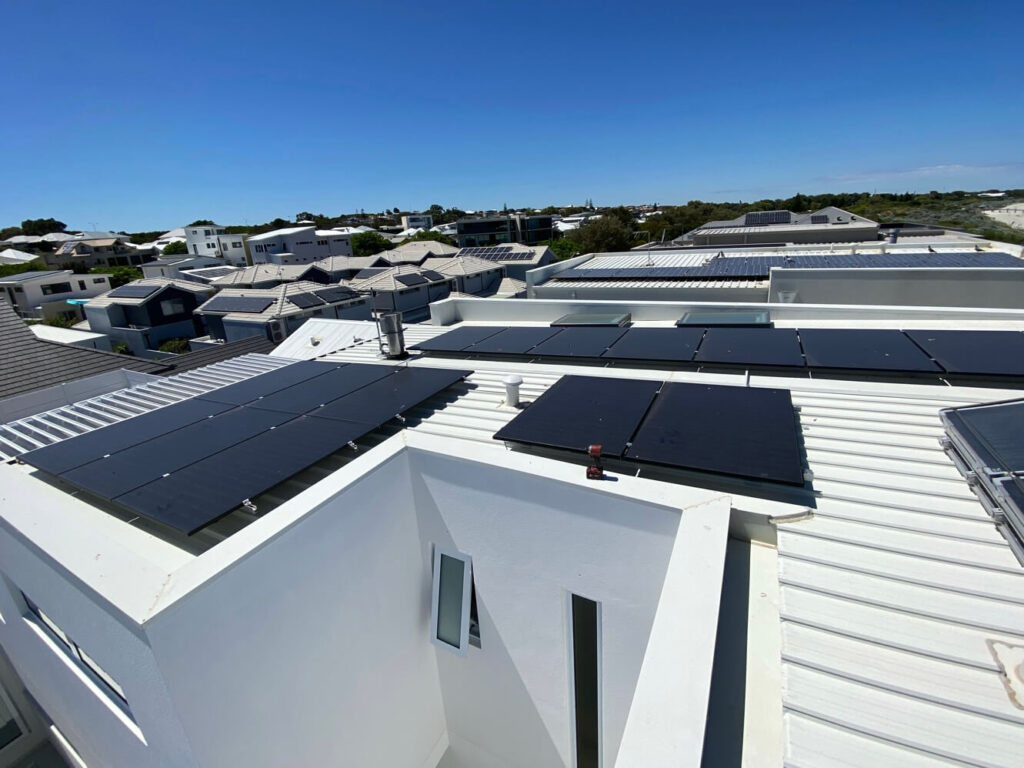
Solar panel installations are not directly affected by the May 2026 battery changes.
- Solar systems continue to receive STCs under the existing SRES rules
- Solar STC values continue their scheduled annual decline, as has always been the case
- No additional WA-specific solar panel rebate applies beyond the federal scheme
The May 2026 changes relate specifically to battery storage, not solar generation.

What This Means for Battery Installations in Western Australia
For WA households considering batteries:
- Batteries installed before 1 May 2026 receive a higher federal rebate due to the higher STC Factor and non-tiered calculation
- Batteries installed from 1 May 2026 onward receive a lower rebate per kWh, particularly for larger systems
- Smaller and mid-sized batteries become relatively more attractive under the tiered structure
Importantly, the Western Australian Residential Battery Scheme remains separate from the federal rebate and can still be combined with STCs, subject to eligibility requirements such as Virtual Power Plant participation.
Why Timing Matters
The federal battery rebate is calculated based on the installation completion date, not the quote or contract date. This means households planning to install battery storage in early 2026 may benefit from completing installation before 1 May 2026 to access higher rebate levels.
As the STC Factor continues to decline over time, early adoption generally results in stronger upfront incentives.
Key Takeaways for WA Homeowners
- Federal battery rebates are reducing from 1 May 2026
- Larger batteries receive lower marginal rebates under the new tiered system
- Solar rebates continue unchanged under existing STC rules
- WA state battery incentives remain available and stackable with federal rebates
- Installation timing has a direct impact on rebate value
Why Acting Now Makes Sense
With changes to the federal battery rebate taking effect from 1 May 2026, timing can make a meaningful difference to the rebate available on your system. Installing before the STC factors reduce may result in a higher upfront discount, particularly for households considering battery storage.
Rebates are designed to support early uptake, not reward delay. As STC values step down and funding is spread across more households, the incentive available for each installation gradually reduces.
If you are already thinking about solar, batteries, or expanding an existing system, now is a sensible time to explore your options.
Our friendly team can talk through:
- Current rebate eligibility
- System sizing that suits your household and energy usage
- How Federal and Western Australian Solar and Battery incentives can be combined
- Installation timing and what that means for your rebate
There is no obligation, just clear advice and a straightforward quote so you can make an informed decision with confidence. Reach out today on (08) 6185 0478 or request a quote and we’ll be in touch.
References

Ready to Get Started?
Drop us a line or fill out our quote form and we will be in touch for an obligation free Quote
DMG Solar & Battery Services
DMG Solar provides a superior service which overall adds value to your property.


Join Thousands of WA HomeownersBook Your Free Consultation
See why more families are choosing DMG Solar for trusted installations.
Trusted by TheLeading Brands